
Why Yin Yoga is Beneficial
Tammy More | OCT 1, 2024
yinyoga
yogablog
yogapractice
awareness
peacful
selfcare
wellbeing
yinyogabenefits
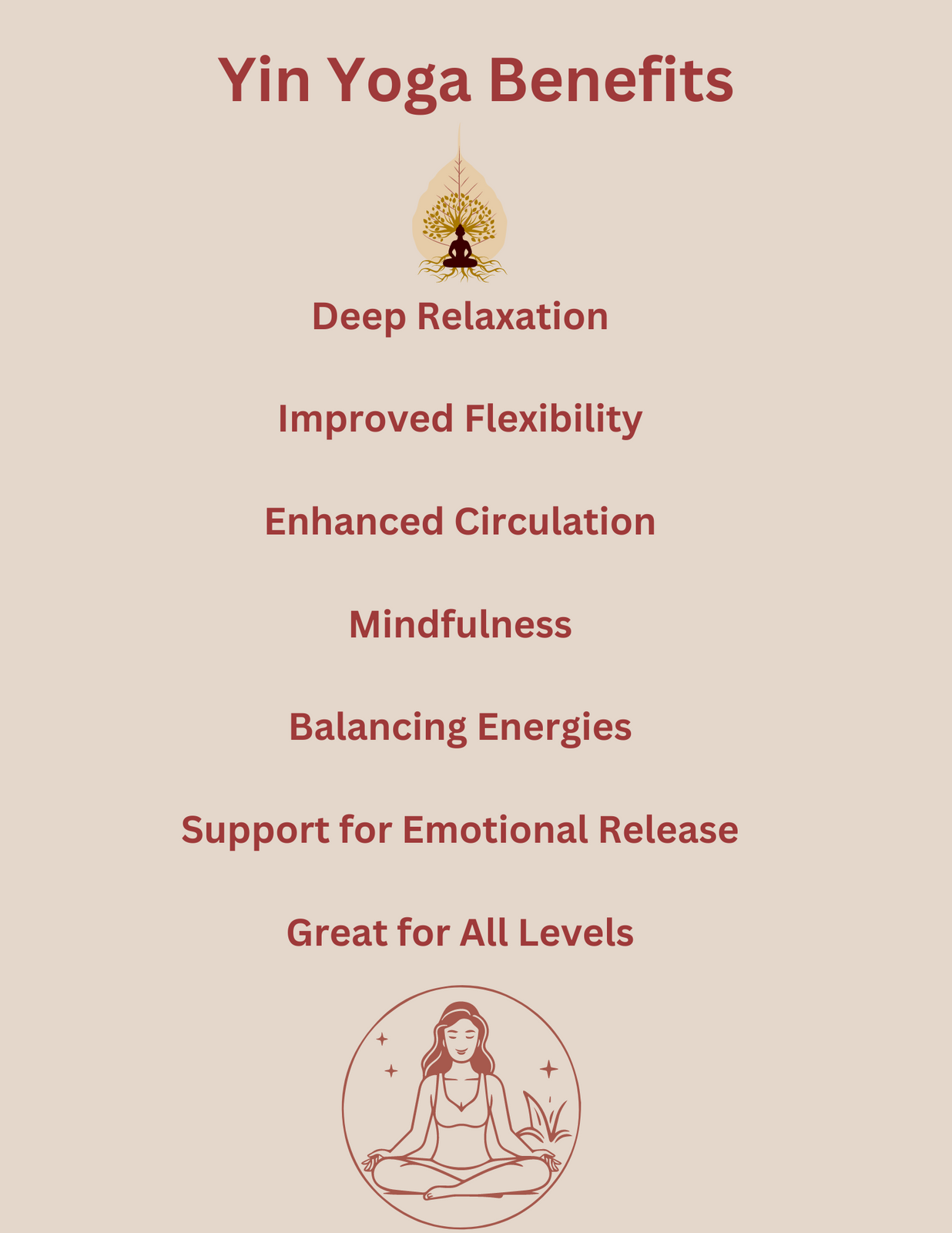
Why practice Yin Yoga? There are many benefits that Yin Yoga offers for the mind, body, spirit and fascia (connective tissues). It's a passive practice and a nice overall balance to incorporate with the more active style of yoga, if that's what you practice as a daily yoga routine.
Yin Yoga asanas (poses) are typically held for 1-3 minutes and sometimes can be longer depending on an individual's needs and how they feel on any given day.
There are three principles of practicing Yin Yoga:
- Come into the pose to an appropriate depth, meaning that you enter the pose as deep or as comfortable as it's suitable for your body.
- Resolve to remain still. Sometimes this principle can be a bit challenging and overwhelming. Our minds are constantly going round and round and to hold the mind and body still even for a minute can seem like forever.
- Hold the pose for time, 1-3 minutes or whatever time frame is appropriate for you.
Some of the benefits of practicing Yin Yoga:
- Deep Relaxation: Yin yoga encourages a meditative state, helping to calm the mind and reduce stress.
- Improved Flexibility: By holding poses for longer durations, you target deep connective tissues, promoting flexibility in the joints and fascia.
- Enhanced Circulation: The slow, sustained stretches improve blood flow, which can aid in recovery and overall joint health.
- Mindfulness: The practice encourages awareness of breath and sensations, fostering a deeper connection to your body and present moment.
- Balancing Energies: Yin yoga complements more active forms of exercise (like yang yoga or cardio), creating a balance in your practice and overall well-being.
- Support for Emotional Release: Holding poses for extended periods can bring up emotions, allowing for a safe space to process and release them.
- Great for All Levels: Yin yoga is accessible, making it suitable for beginners and experienced practitioners alike.
Incorporating yin yoga into your routine can provide a valuable counterbalance to the busyness of daily life and more intense workouts.
Tammy More | OCT 1, 2024
Share this blog post
Breathe Inspire Yoga Center
CONTACT
© 2026 Breathe Inspire Yoga Center
 OfferingTree